






52 products
Softcase suitcases
A soft suitcase is a versatile and practical travel suitcase that offers a light and flexible alternative to traditional hardcase suitcases. Its soft exterior makes it easy to store and compress, making it perfect… Read more
- Free shipping over 500 kr
- 14 days to return
- Store at Vesterbrogade 6D
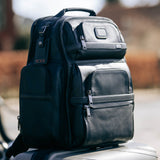
Alpha 3 Small Compact 4 Wheeled Brief
Now 4.720 kr
Was 5.900 kr-
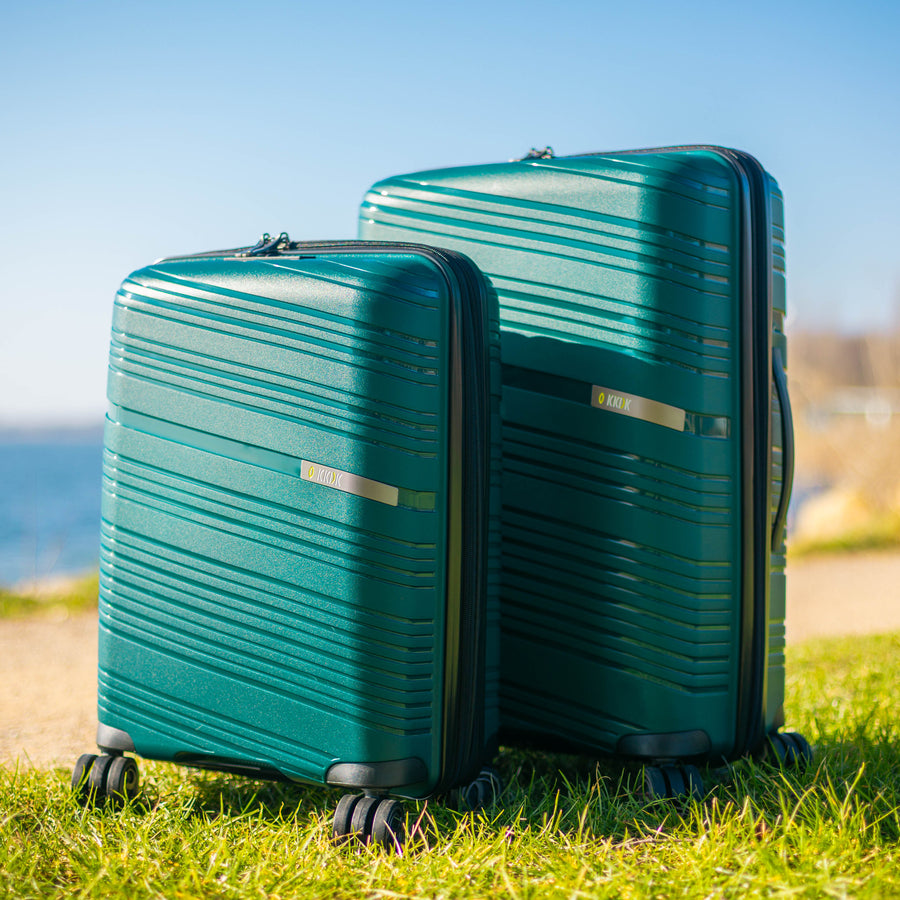 Size guideWhich size do you need?Compare dimensions, weight and capacity, and choose the size that suits your trip.Find your suitcase
KKDK Ariel Suitcase on 2 wheels
Now 500 kr
Was 899 krKKDK Business Cabin Trolley Black
Now 749,25 kr
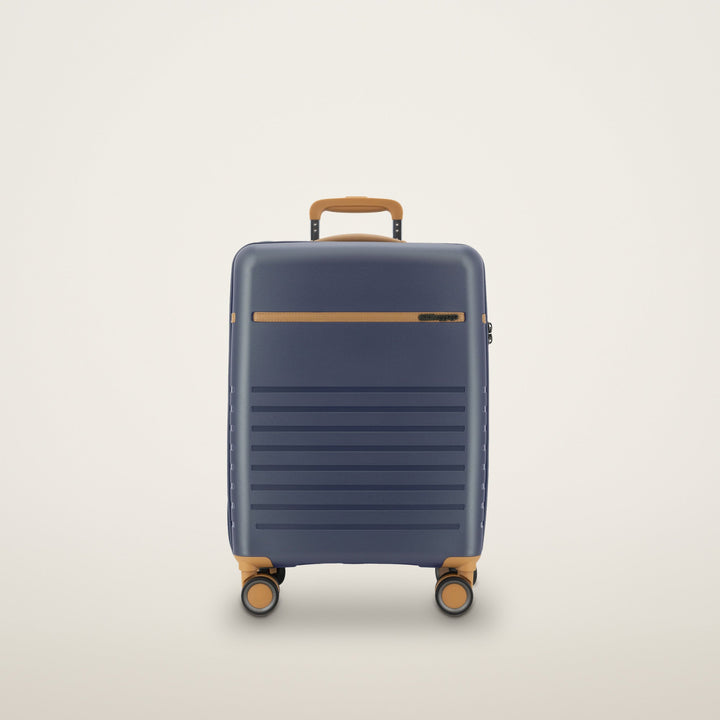
Was 999 krKKDK Business Line Cabin Suitcase
2.099 kr
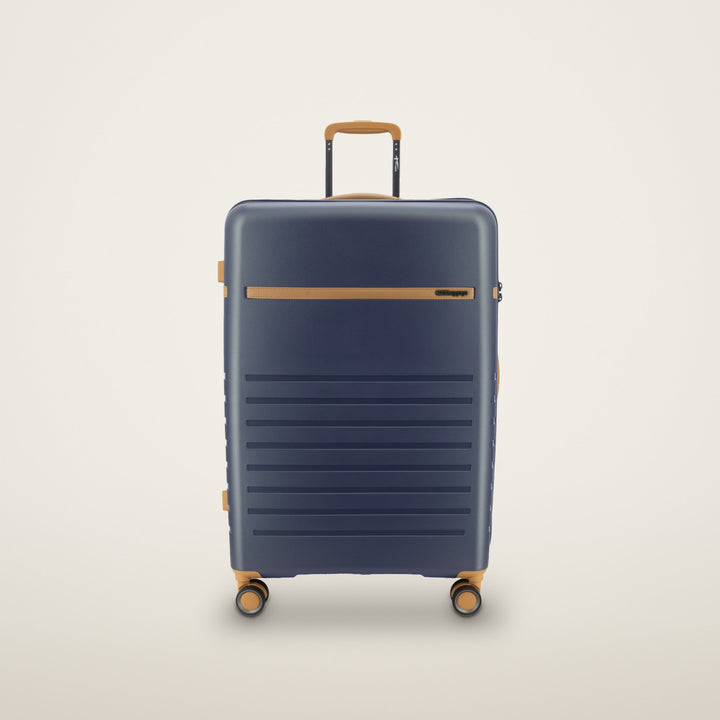
KKDK Business Line Medium Suitcase
2.399 kr
KKDK Business Line Large Suitcase
2.699 kr
KKDK Cabin Business Trolley PC Bag
Now 1.274,25 kr
Was 1.699 krKKDK cabin suitcase in fabric
Now 974,25 kr
Was 1.299 kr






You have seen 24 of 52 products
Show more productsAbout Softcase suitcases
A soft suitcase is a versatile and practical travel suitcase that offers a light and flexible alternative to traditional hardcase suitcases. Its soft exterior makes it easy to store and compress, making it perfect for packing extra for those last-minute essentials.
This type of suitcase is ideal for travelers who value flexibility and convenience.
This type of suitcase is ideal for travelers who value flexibility and convenience.
Softside suitcases in durable textiles for your travels
A softside suitcase is a functional and forgiving choice for both business trips and vacations. While hard shells maintain a fixed geometry, a soft suitcase offers a significant advantage in terms of structural flexibility and practical interior organization. Textile materials make it possible to utilize space optimally in a car trunk or an overhead bin on a train, where rigid suitcases often fall short due to narrow angles. At Copenhagen Luggage, we retail well-thought-out travel gear from reputable manufacturers such as Samsonite, TUMI, and our own brand CPH Luggage, all of which combine technical durability with ergonomic operation. When you invest in softside suitcases from our range, you gain access to our own authorized luggage service workshop as well as a minimum 2-year warranty on most models, ensuring competent advice and service throughout the lifetime of your suitcase.
Advantages of a soft suitcase with flexibility and quick access
The most noticeable difference in everyday life as a traveler is accessibility. A soft suitcase is almost always constructed with spacious exterior front pockets. This means you avoid having to open the entire main compartment in the middle of the airport to find travel documents, an extra sweater, newspapers, or your laptop. For the traveler who is often in security lines or on the go between train meetings, these front pockets save precious time and minimize hassle. At the same time, many of our models are equipped with an integrated expansion zipper. With a single zip movement, you can increase the depth of the suitcase by several centimeters, providing extra packing volume for souvenirs, purchases, or extra clothing on the return trip. The soft front gives way to the contents rather than resisting, making packing significantly easier when the suitcase is filled to the brim.
Materials from ballistic nylon to recycled polyester
The durability of a fabric suitcase depends directly on the fibers used and the density of the weave. At the top of the scale are suitcases made of nylon and especially ballistic nylon, which was originally developed for military purposes. This type of weave provides exceptional resistance to wear and tear, making it the preferred choice for brands like TUMI. Tightly woven polyester also delivers stable performance with a low net weight and resistance to moisture when the fabric is treated with a water-repellent coating. Sustainable alternatives are also gaining ground in the form of R-PET fibers, which are woven textiles made from recycled plastic bottles. R-PET is used exclusively in soft suitcases and should not be confused with hard plastic shells. The structure of the weave ensures that a modern fabric suitcase can withstand intensive contact with luggage belts and abrasive surfaces without losing its shape or the integrity of the threads.
Choose the right maneuverability with 2 or 4 wheels
When choosing a soft suitcase with wheels, the number and placement of the wheels are crucial for ergonomics. A soft suitcase with 4 wheels is equipped with double wheels that can rotate freely in all directions. This provides effortless movement, where the suitcase rolls upright beside you on flat floors in airport terminals and train stations. The strain on your wrists and shoulders is significantly minimized because you simply push the suitcase forward without having to carry its weight. Our selection of 4-wheel suitcases covers both compact cabin models and large suitcases that glide effortlessly through busy passageways.
Classic two wheels for uneven surfaces
For trips that involve walking on cobblestones, curbs, or gravel in cities, the two-way trolley with 2 integrated wheels is often the most robust choice. On a 2-wheel model, the wheels are typically larger in diameter and partially recessed into the frame of the suitcase itself. This protects the wheel suspension from impacts during rough handling and makes it possible to pull the suitcase stably behind you at an ergonomic angle. Two wheels also mean that the suitcase stands completely still on the surface when released, which prevents it from rolling away on sloping platforms or in public transport.
Comparison between softside and hardcase suitcases
The choice between a soft fabric suitcase and a hard suitcase depends on your preferences for packing and type of travel. A softside suitcase excels in flexibility, exterior pockets, and the ability to squeeze into tight luggage compartments. Conversely, hardcase suitcases provide a rigid shell that protects the contents against external pressure and impacts. At Copenhagen Luggage, we sell hard suitcases in aluminum, polypropylene (PP), and 100 percent virgin polycarbonate—materials that are not mixed with inferior plastic types and that provide high impact absorption. We deliberately do not sell suitcases made of ABS plastic, as ABS is the cheapest suitcase plastic on the market, which cracks easily during standard airport handling and in over 95 percent of cases cannot be repaired. If you want a strong suitcase at a lower price, we always recommend polypropylene over ABS. Below you can compare the characteristics of softside suitcases and hardcase suitcases.
Overview of functional differences in materials
| Feature | Softside (Nylon / Polyester / R-PET) | Hardcase (Aluminum / Polycarbonate / PP) |
|---|---|---|
| Flexibility and packing | Forgiving textiles, exterior zipper pockets, and expansion capability | Fixed shell structure without outer pockets, maintains shape under external pressure |
| Durability | Durable woven textiles resistant to tearing and scuffs | Shape-stable aluminum, impact-resistant polypropylene (PP), or shatterproof 100% virgin polycarbonate |
| Net weight | Low weight profile based on tightly woven lightweight textiles | Optimized weight in plastic, while aluminum weighs more in exchange for higher fracture strength |
| Ideal use | Train travel, car travel, and air travel requiring organization in front pockets | Checked air luggage as well as transport of fragile items |
Size guide for cabin size and large suitcases for 23 kg check-in
Choosing the right suitcase size is about matching the duration of your trip with the airlines' luggage rules. For weekend trips and shorter business trips, most travelers choose cabin suitcases. The general European standard for a cabin suitcase is a height of 55 cm with a volume of typically 35-45 L. This provides ample space for clothes for 2-4 days without the need to check in luggage. If, on the other hand, you are going on a longer vacation or packing equipment for a full week or two, large suitcases in soft textile are ideal. For a standard checked-in air luggage of 23 kg, a suitcase of approx. 70-100 liters is appropriate. Many classic large suitcases for 23 kg are around 100 liters, which utilizes the weight limit without exceeding the airlines' permitted external dimensions.
Rules for carry-on luggage with European airlines
The permitted dimensions of airlines vary depending on the ticket type. At SAS, an overhead cabin suitcase may measure a maximum of 55 x 40 x 23 cm with a permitted weight of max. 8 kg, while a personal bag under the seat may measure 40 x 30 x 15 cm, equivalent to approx. 18 L. Be aware that SAS Economy Light does not include cabin luggage in the overhead bin; this must be purchased separately. At Norwegian, an overhead bag may also measure 55 x 40 x 23 cm, while the bag under the seat may measure 30 x 40 x 20 cm. The LowFare ticket type only includes the bag under the seat, while LowFare+ includes a cabin suitcase, with a total weight limit of 10 kg for both bags combined. At Ryanair, the free small carry-on for all ticket types may measure 40 x 30 x 20 cm under the seat, while a Ryanair Priority cabin bag may measure 55 x 40 x 20 cm with a weight limit of max. 10 kg. As the airlines' rules are updated continuously, you should always check your specific airline's current terms before departure.
Security and organization with TSA lock and details
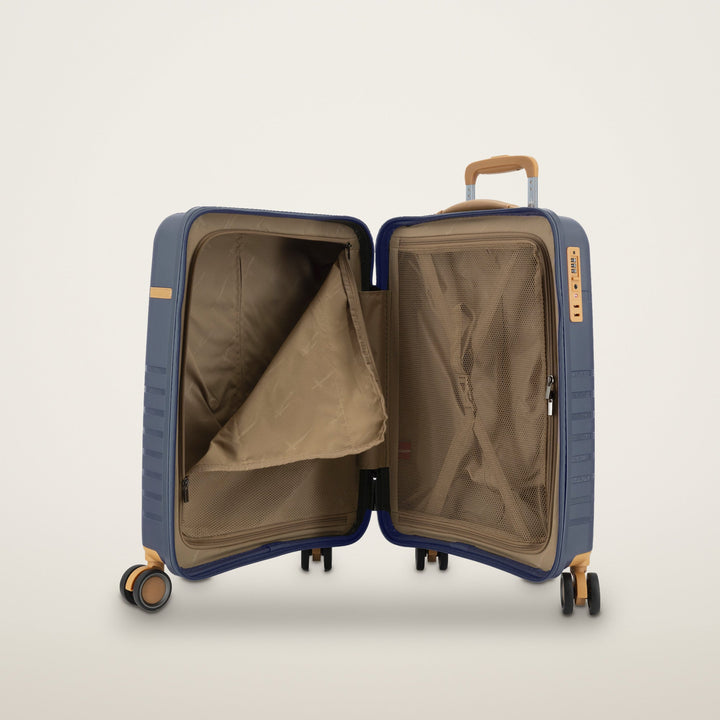
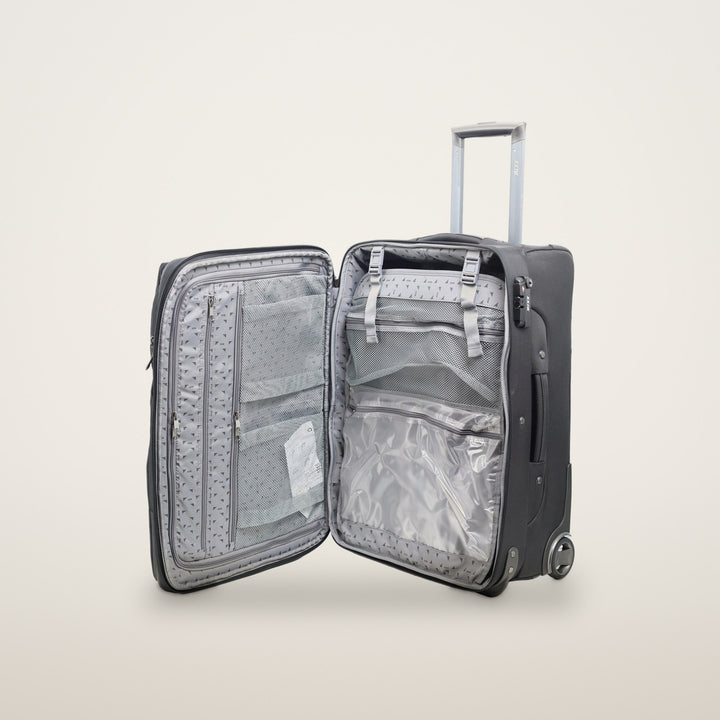
When you travel internationally, the security of your belongings is crucial. Most quality-assured softside models from brands such as Samsonite and KKDK are equipped with an integrated TSA combination lock. The lock secures the zipper pulls and allows customs authorities, including in the USA, to inspect the contents with a special key without breaking the lock or damaging the zipper. Inside, a softside suitcase often features adjustable cross-straps that keep clothes in place, as well as integrated zipper pockets in the lid for smaller items and toiletries. Combined with the external storage compartments, this provides an organized packing experience where all equipment has a fixed place.
Frequently asked questions about softcase suitcases
Which is best, a hard or a soft suitcase?
The choice depends on your travel pattern. A soft suitcase made of durable nylon or polyester is optimal if you want external pockets for quick access and flexibility in trunks and overhead bins. A hard suitcase made of polypropylene or 100 percent virgin polycarbonate, on the other hand, provides a firm shell against external pressure and impact, which is advantageous for checked-in air luggage with fragile contents.
Can a softcase suitcase withstand being checked in?
Yes. Ballistic nylon and tightly woven polyester are specifically developed to withstand baggage belts and cargo holds, and the yielding textile absorbs impact rather than cracking. If you are transporting particularly fragile items such as glass or camera equipment, however, a hard shell still provides better protection against pressure from surrounding luggage.
How do I clean a soft suitcase?
Remove surface dirt with a soft brush, and then wash off stains with lukewarm water and a little mild soap on a damp cloth. Avoid solvents and machine washing, as this breaks down the textile's water-repellent impregnation. Always let the suitcase dry completely with the lid open before storage.